The Eastern Massasauga Rattlesnake: Ontario’s Unique Reptile
The Eastern Massasauga Rattlesnake, Ontario’s only venomous snake, stands as a captivating and distinctive reptile within the province’s natural landscape. While encountering this snake is a rarity due to its elusive behavior, understanding its characteristics and coexisting safely with it is essential. In this article, we delve into the fascinating world of the Eastern Massasauga Rattlesnake, exploring its behavior, conservation status, identification, safety tips, and more.
A Threatened Species
Once widespread across Southern Ontario, the Eastern Massasauga Rattlesnake’s population has drastically declined due to various factors, including persecution, habitat fragmentation, and loss. As a threatened species, both Provincial and Federal legislations offer protection to this unique reptile. The massasauga rattlesnake is an integral component of Ontario’s natural heritage, underscoring the importance of raising awareness and sharing habitats responsibly.
Identifying Ontario’s Eastern Massasauga Rattlesnake
Distinguishing the Eastern Massasauga Rattlesnake from other snakes is crucial for safety and conservation efforts. Educating yourself, children, and visitors about its distinctive features is a responsible approach. While the intention is not to instill fear, promoting awareness aids in the coexistence of humans and these reptiles.
Characteristics to Look For
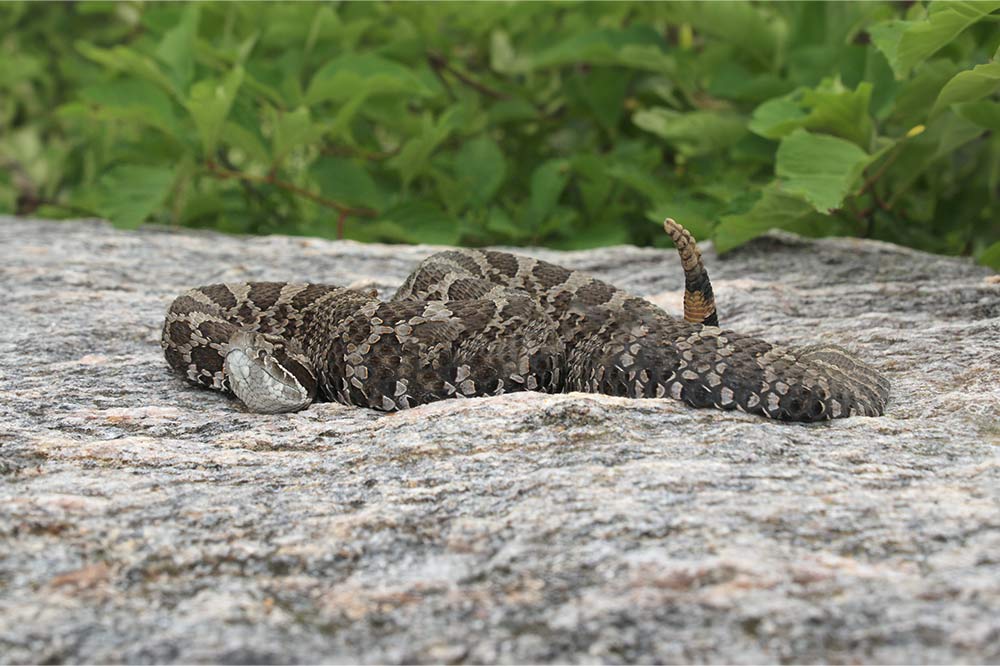
- Color: The snake boasts a brownish-grey to dark-grey background with distinct dark saddle-shaped blotches on its back. Multiple rows of alternating blotches adorn its sides, each edged in white. The belly exhibits a dark hue.
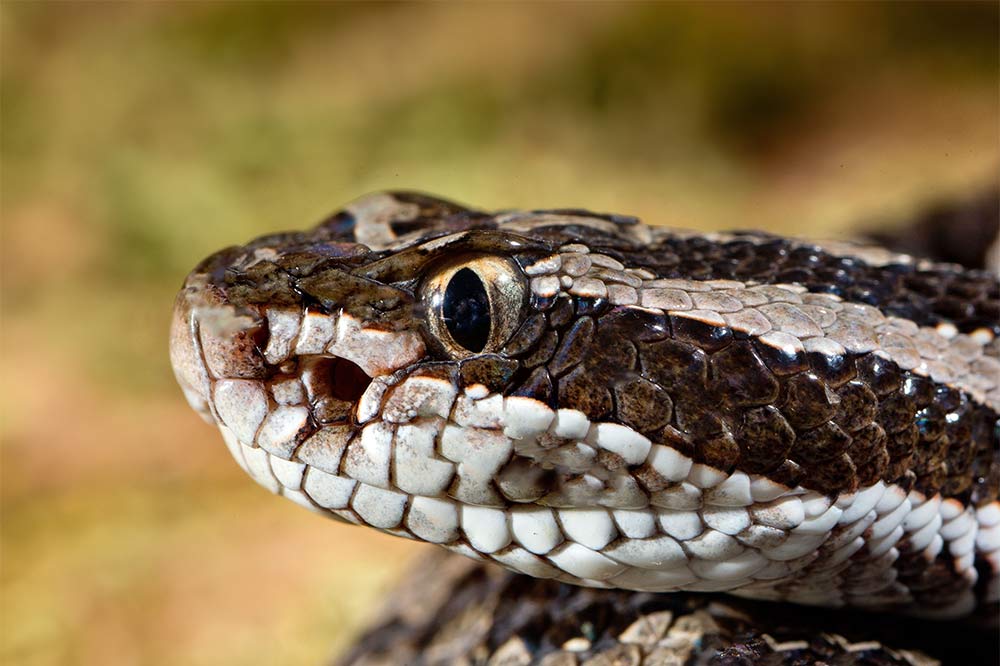
- Shape: Characterized by its heavy body, the snake features a diamond-shaped head with white stripes along the jawline. The neck appears narrow in contrast to the broader head and body. A stubby tail capped with a brown, segmented rattle completes its unique appearance.
- Eyes: With vertical pupils reminiscent of a cat’s, the snake possesses heat-sensitive pits between its eyes and nostrils. If you can observe these features, you’re likely too close. Consider using binoculars for safe observation.
Snake Safety Tips
When encountering the Eastern Massasauga Rattlesnake, practicing caution and respect is essential. Following these safety guidelines can help minimize risks and ensure peaceful coexistence:
Appropriate Attire:
Wear protective footwear like hiking boots that cover the ankles, along with loose-fitting, long pants—especially important when hiking at night or traversing rocky areas, brush, or tall grass.
Nighttime Precautions:
Utilize a flashlight when moving around at night to prevent accidental encounters.
Mindful Movement:
Always watch where you step and place your hands. Use a stick to gently probe potential hiding spots before reaching in.
Pet Awareness:
Keep pets leashed, as their curiosity may lead to encounters with snakes.
Encountering a Rattlesnake:
If you hear the rattle, remain calm. Pause, determine the snake’s location, and slowly move away, giving the snake space to retreat.
Responding to a Snakebite
While snakebites are rare, knowing how to respond in case of an incident is vital:
- Stay Calm: Don’t panic. Remember, a bite might not necessarily inject venom.
- Seek Medical Help: Call emergency services for transportation to the hospital. If possible, keep the bitten person calm and still while waiting for help.
- Wound Care: Wash and cleanse the wound. Remove any jewelry near the bite area to accommodate potential swelling.
- Splinting: Loosely splint the limb to minimize movement.
- Medical Attention: Always seek medical attention. Never attempt to suck out venom, apply a tourniquet, ice, or cut the bite area.
- Never Harm the Snake: Never attempt to catch or kill the snake. Doing so is unnecessary, dangerous, and illegal due to its protected status.
Putting Risks in Perspective
The Eastern Massasauga Rattlesnake’s striking distance is limited to half its body length. The fangs and venom glands are relatively small, and bites are unlikely to penetrate leather hiking boots or loose clothing. Moreover, many bites result in either no venom or only a small quantity injected. Keep in mind that the chances of snakebite are minimal. Over the past four decades, there have been only two fatalities linked to snakebites in Ontario, both occurring due to lack of proper medical attention.
Understanding and respecting the Eastern Massasauga Rattlesnake’s existence is key to its conservation and human safety. By learning to identify, practicing caution, and following safety protocols, we can coexist harmoniously with this unique reptile. Remember, these creatures play an important role in Ontario’s ecosystem, and our responsible actions contribute to their continued survival.